
The question we hear most
Readers write to us, and stop me at the market stalls where I photograph, with nearly the same sentence: why does it take so long? They have seen a spread on a laundromat or a hockey arena or a Saturday market in People & Places, and they assume I arrived one morning, took a few frames and left. The honest answer is that the first visit rarely produces anything we would print.
On a first visit, people are polite and a little careful. They stand straighter than they normally do, they stop the conversation they were having, and they look at the lens instead of at each other. A photograph made in that state shows a place performing for a visitor, not a place at ease.
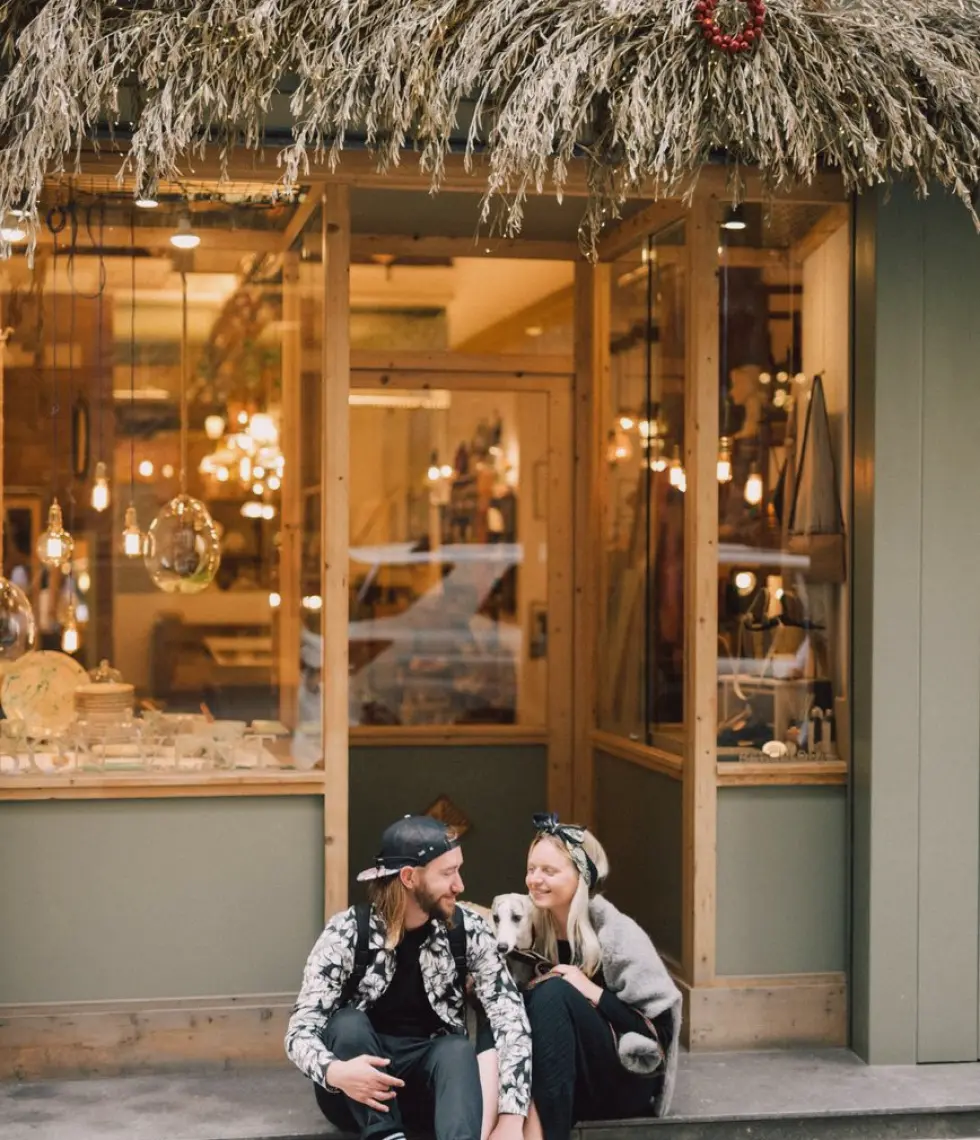
So the short reply I give is this: we are waiting for the place to forget about me. That does not happen in an hour. It happens over a handful of ordinary days, and the pictures we choose almost always come from the later ones.
What the first visit is actually for
I do not treat the first visit as a shoot. I treat it as an introduction. I walk the block or the main street without a camera raised, I buy a coffee, and I tell whoever is running the counter or the front desk what the magazine is and what I am hoping to do.
Most of that visit is listening. I learn when the bakery is busiest, which bench the retired men take at ten, and where the light falls across the intersection in the morning. None of it ends up in a caption, but all of it decides where I stand on the next visit.
I also ask permission plainly and early. Some people say yes at once, some ask me to come back, and some decline. A decline is a complete answer, and I note it and move on.
- Walk the place without raising the camera
- Say clearly who we are and what the piece is for
- Note the hours when the place is busiest and quietest
Why light and routine set the pace
Mid autumn is a good example of why we cannot hurry. The sun sits low for much of the day now, and a main street that looks flat at noon turns warm and layered around four o'clock. I might need three afternoons just to catch the half hour when the storefronts and the people on the sidewalk are lit the same way.
Routines matter in the same way. A school crossing, a shift change at a plant, a Sunday lunch after services: these happen at fixed times, and you cannot ask them to repeat for you. If I miss the moment, I return the next week at the same hour and try again.
This is the real reason a portrait of a place stretches over weeks. We are working to the clock of the people who live there, not to our own deadline.
How trust shows up in the picture
By the third or fourth visit, something shifts. The woman at the hardware counter keeps talking to her customer while I stand a metre away. A boy on a bicycle rides past and does not turn his head. Those small signs tell me the camera has become part of the furniture.
This is also when people start offering things: a tip about a Thursday gathering, an introduction to a neighbour, a story behind the faded sign above the door. Several of the best frames in People & Places began with an invitation I could not have asked for on day one.
I try to repay that by being predictable. I arrive when I said I would, I keep my equipment small, and I show people the pictures of them if they would like to see them. A subject who feels respected stands differently, and the photograph carries it.
- Arrive when you said you would
- Keep equipment small and quiet
- Show people the frames they appear in if they ask
What we leave out, and why
Readers sometimes ask why a piece about a town does not show the whole town. The answer is that we choose a few people and a few corners and look at them closely, rather than sweeping across everything and saying little. A grocery, a bus shelter and a church basement can tell you more about a community than twenty wide shots of rooftops.
We also leave out frames that would embarrass someone. A person caught mid-sentence with an unflattering expression, or a child in a moment the family would rather keep private, stays in the contact sheet. Margaret Olsen, our Editor-in-Chief, reviews every sequence with that in mind.
Captions follow the same rule. We write what we saw and who told us what, and we do not add drama that the afternoon did not contain.
What this means if you want to try it yourself
Plenty of readers photograph their own street and ask how to begin. My advice is to pick one small place you already visit, such as a corner shop, a rink or a bench by the river, and go back to it at the same hour for a month. Say hello every time. Take fewer pictures than you think you need.
You will notice that the third week looks different from the first. The people loosen up, you stop searching for something to shoot, and you start noticing what the place does on its own. That change is the whole method.
If you would like someone to look at that work with you, our editors do offer portfolio reviews and story-planning sessions by enquiry, and the Prices page explains how they work.
So the answer to the question we hear most is simple: a portrait of a place takes many visits because trust, light and routine each take time, and none of them can be rushed. The quiet, unposed frames you see in People & Places come from the later days, when the camera has stopped being news. If you remember one thing, make it this: go back, listen first, and let the street forget you are there.