
The question behind the question
The question reaches the desk in many forms, by letter and by email, and at the end of talks: why would a serious photography magazine spend its pages on a kettle, a bus shelter or a porch swing? Some readers ask it kindly, some with a raised eyebrow. After many of these exchanges I have come to hear a simpler worry underneath: is this enough to look at?
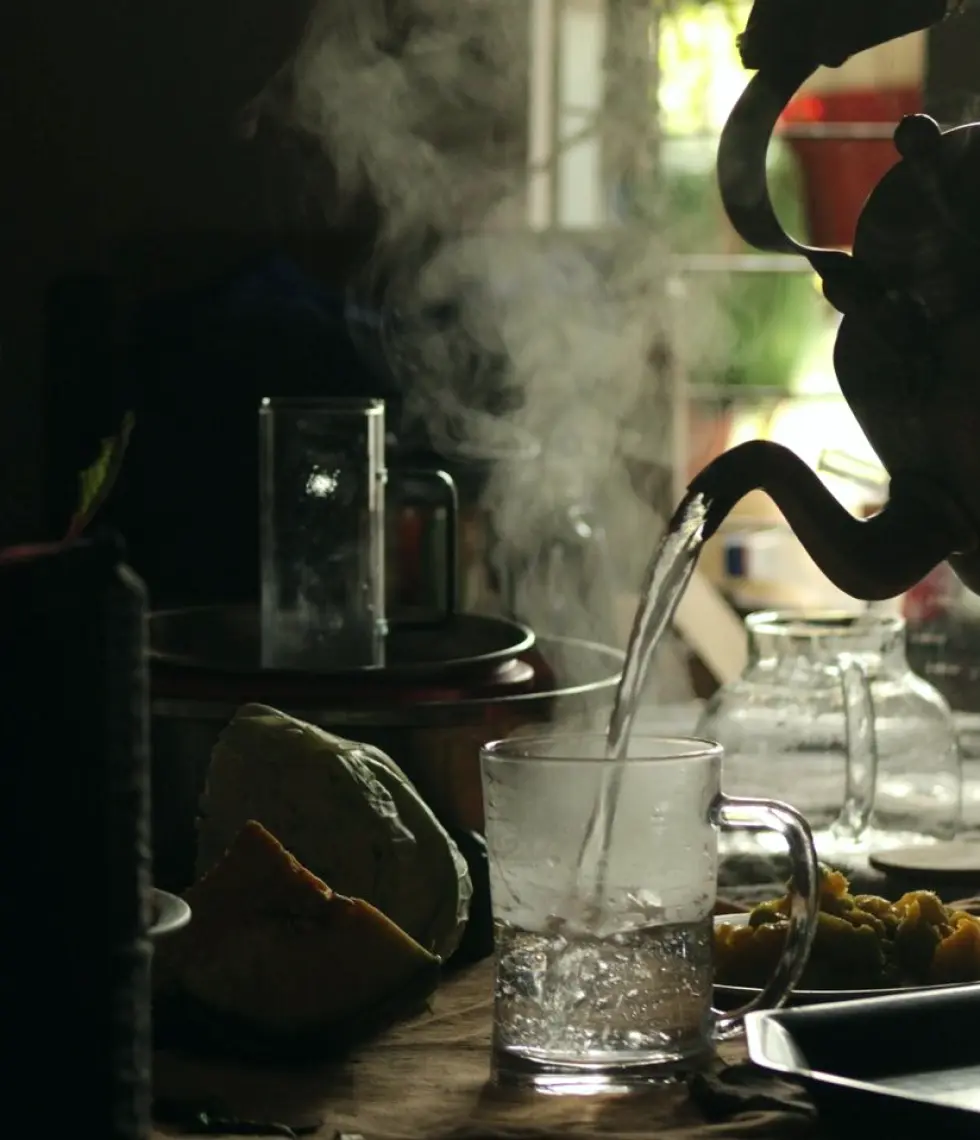
My honest answer is yes, and often more than enough. A kitchen at seven in the morning contains a household's whole arrangement of care, money, habit and humour, and it does so without anyone performing for the camera. Everyday Moments exists because those rooms are where a community actually lives, long before anything happens that anyone would call an event.
The department is also the one our readers write to us about most, which tells me the question is asked out of affection as much as doubt. People want to know whether their own tables and doorsteps could ever belong in a magazine.
What a kitchen can show that a headline cannot
A headline reports that something occurred. A kitchen shows how people go on afterward. When Daniel Okafor spends a long visit in a home, the frames that matter are rarely the first ones: the second cup set out for a neighbour, the calendar crowded with other people's appointments, the worn patch on the counter where the same bowl has sat for decades.
These details are not decoration. They explain how a street looks after its members, who is expected to drop by, and which rituals survive a bad week. A photograph of a lunch being packed can tell you more about a town's economy and its tenderness than a page of statistics, because it is specific and it was not arranged for you.
That specificity is also why we keep the frame wide enough to include the clutter. A tidy room tells a flatter story than a lived-in one, and our readers can tell the difference at a glance.
- Objects that repeat from day to day
- Signs of who else belongs in the room
- Light that is already there, never added
Commutes and porches: the in-between places
Kitchens are only part of the answer. The department also looks at the places people pass through: the platform at dawn, the car parked outside a shift change, the porch where an evening conversation starts without anyone deciding it should. These in-between spaces are where neighbours actually meet, and they are rarely photographed because nothing seems to be happening in them.
That apparent emptiness is exactly the opportunity. A porch in mid autumn, with a blanket over the railing and a pair of boots left by the door, says that someone expects company and someone is staying put. We photograph these scenes slowly, usually on a second or third visit, once the household has stopped noticing us.
How we ask permission, and when we step back
Readers also ask how anyone agrees to be photographed at breakfast. The honest answer is that the camera comes out late. Our visits begin with conversation, sometimes with help carrying groceries or washing a cup, and nothing is taken until the household has seen what we are after and said it is fine.
If someone changes their mind afterward, the picture does not run. Captions are written with the people in them, and they are corrected if we have misunderstood a name or a relationship. We would rather lose a good frame than keep a trust we did not earn.
Children are photographed only with a parent present and willing, and we are slower still about homes where the arrangement of the room reveals more than a family intends to share.
- Conversation first, camera later
- Captions checked with the people pictured
- A withdrawn photograph stays withdrawn
What we leave out on purpose
The other half of the answer is restraint. We do not stage a warm scene to make a point, and we do not rearrange a table so the light falls better. If a room is untidy, it stays untidy. If a family is quiet at dinner, we photograph the quiet.
We also avoid the temptation to treat modest homes as symbols of hardship or of simple virtue. People are not backdrops for our ideas about them. A good Everyday Moments picture lets the person in it remain complicated, a little tired, occasionally amused, and entirely in charge of their own kitchen.
Sometimes that means a visit produces nothing we can print, and I consider that a fair outcome. The department is built on patience, and patience sometimes ends with a handshake and no photograph.
What readers can do with their own rooms
Many of you will want to look at your own table differently after reading this. You do not need better equipment. Choose a quiet hour, stand where you usually stand, and take the picture you would normally skip because it seems too ordinary to bother with.
Look at it again a week later. You will probably find the one thing in it you had stopped seeing: a chair pulled out, a window fogged by the kettle, a coat hung where it has always hung. That small shock of recognition is the whole method of this department, and it is available to anyone with a door and a morning.
So the question has a short answer and a long one. The short answer is that ordinary routines are where community is built, one cup of tea and one held door at a time. The long answer is every picture we publish in this department, made slowly, with permission, and with respect for the people at the table. If a kitchen or a porch near you has been waiting for someone to look, you already know where to begin.